

….as Report Omits Names
…. Fuels Plot to Reject It
Malawi’s Public Accounts Committee (PAC) appears poised to present what critics are already calling one of the most evasive reports in recent parliamentary history, an account of the K128 billion Amaryllis Hotel transaction that details failures but conspicuously omits those responsible.
In a country ranked among the poorest globally, the optics are as troubling as the substance. At issue is not merely a questionable investment, but the alleged diversion of public service pension funds, money belonging to citizens who often spend years waiting, and in some cases dying, before receiving their dues.
Yet, according to documents seen by The Investigator, the PAC report reads less like a forensic inquiry and more like a procedural summary. Names of alleged beneficiaries are absent. Accountability is diluted. Blame is loosely assigned to institutional processes, rather than individuals.
PAC is expected to argue that the Financial Intelligence Authority (FIA) declined to provide names due to ongoing investigations. However, this explanation is already being dismissed in some quarters as implausible, given that both the FIA and the Reserve Bank of Malawi (RBM) previously indicated they had traced the flow of funds.
At the centre of the controversy is the valuation of the Amaryllis Hotel itself. Independent estimates reportedly placed its worth between K30 billion and K40 billion. Yet, under the stewardship of Public Service Pension Trust Fund (PSPTF) board chair Chizaso Nyirongo and a select group of board members, the property was acquired for K128 billion.
The justification rested on projections by EMJ, an unlicensed firm brought in to support the valuation. The company claimed the investment would break even within 18 years, an assertion analysts say stretches credibility for a property widely considered loss-making and originally put up for sale.
Despite the magnitude of the discrepancy, the Anti-Corruption Bureau cleared the transaction, raising further questions about the robustness, and independence, of oversight institutions.
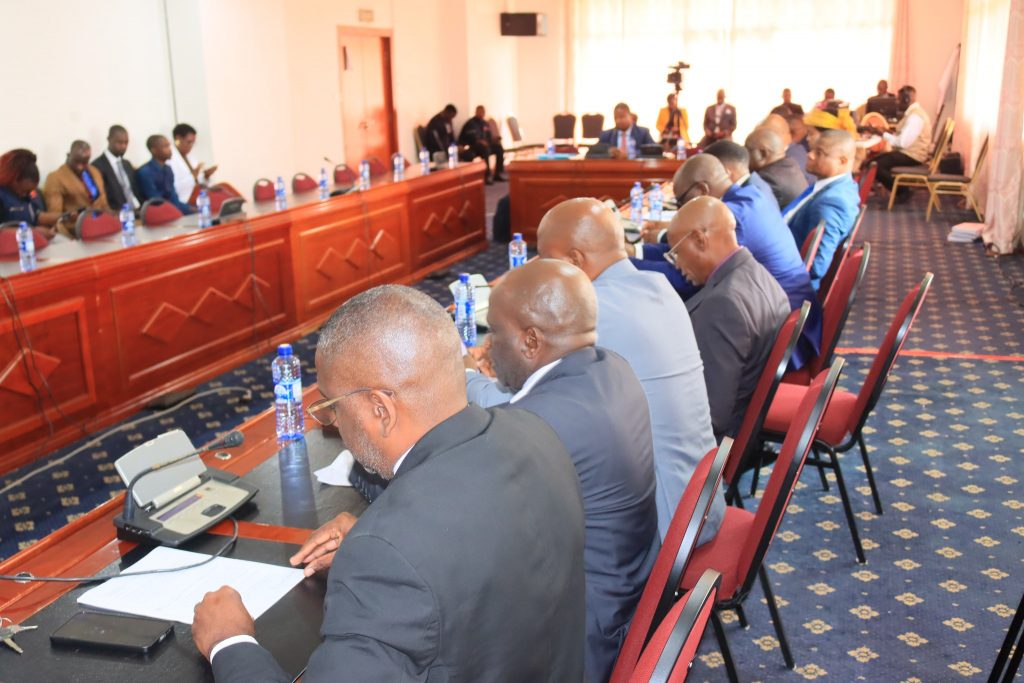
More troubling, critics argue, is what the PAC report fails to do. Parliament possesses sweeping subpoena powers and legal immunity to compel testimony. Yet key figures, including representatives of Yusuf Investments and former senior officials, were never summoned to testify under oath.
Instead, the report stops short of naming beneficiaries, a decision that risks setting a dangerous precedent: that vast sums of public money can change hands without individual accountability.
Behind the scenes, dissent is growing. Several Members of Parliament are reportedly preparing to reject the report, describing it as incomplete and politically compromised.
Financial trails uncovered during parallel investigations paint a more detailed picture than the PAC report itself. The RBM acknowledged freezing K72 billion linked to the transaction, while confirming knowledge of where an additional K18 billion had gone.
Investigators have traced at least K5.7 billion withdrawn in cash, allegedly by a senior political figure. Fiscal Police are said to have established significant portions of the cash trail.
The FIA, whose hearings were conducted behind closed doors, reportedly provided only account numbers to investigators, leaving police to seek court orders to compel disclosure of account holders’ identities.
Meanwhile, law enforcement agencies searched the residence of Colleen Zamba, former Secretary to the President and Cabinet, amid claims that up to K2 billion may have passed through associated channels. Despite this, she was allowed to leave the country before providing testimony.
The unfolding saga has exposed unusual dynamics within Parliament. While some MPs are pushing back against the report, there are indications of a rare convergence between government and opposition benches, one that may ultimately favour adoption of the diluted findings.
Critics suggest the alignment is less about consensus and more about mutual protection, as the report reportedly avoids implicating senior figures across the political divide.
Attention is now shifting to Peter Mutharika, whose response may define his leadership Having campaigned on restoring credibility and discipline in governance, the President faces mounting pressure to act decisively, particularly as allegations begin to brush against politically connected individuals.
Failure to do so risks reinforcing a familiar narrative: that public institutions can be bent to shield the powerful, while ordinary citizens bear the cost.
The political and economic consequences of the Amaryllis transaction are unlikely to dissipate with the tabling of the PAC report. If anything, the omissions may deepen public distrust.
Editors view: Proven Leadership or Proven Disappointment?
On September 16, 2025, Malawians delivered their verdict with unmistakable clarity: they had grown weary of impunity, allergic to incompetence, and exhausted by the endless haemorrhage of public funds. It was a vote not just for change, but for dignity.
And yet, barely has the ink dried on that mandate than the Democratic Progressive Party (DPP), parading under the confident banner of “Return to Proven Leadership”, finds itself stumbling from one scandal to the next. One is tempted to ask proven at what, exactly.
The Amaryllis affair is not just another controversy; it is a test case of credibility. And if this is what “proven leadership” looks like before a first budget is even passed, Malawians are right to feel short-changed. The party can hardly point fingers elsewhere. The culprits, it would seem, are not ghosts from the past, but familiar faces driven by an insatiable appetite for public wealth.
Meanwhile, the public mood is brittle. The economy remains fragile, household incomes are stretched thin by a relentless barrage of taxes and levies, and fuel prices continue their upward march, helped along by global turmoil, including the ripple effects of Donald Trump’s controversial geopolitical ventures. For ordinary Malawians, survival is fast becoming a daily negotiation.
So the question lingers, heavy and unavoidable: where is the “proven leadership” that was promised? If those in power govern with the same casual disregard for accountability that defined their predecessors, then the distinction between the DPP and its rivals becomes a matter of branding, not substance.
Words from the presidency, however well-crafted, are no longer sufficient. Trust, once fractured, is not repaired with statements, it is restored through action. And action, in this case, demands courage.
Will President Peter Mutharika act?

That is the question echoing across the country. Allegations have begun to circle uncomfortably close to the President’s inner circle. The dilemma is as stark as it is familiar: will he protect allies, or protect his legacy? History offers many examples of leaders who chose the former and paid dearly for it.
The Amaryllis saga need not have been the DPP’s burden. But somewhere along the line, someone chose to insert themselves into it, and in doing so, handed the opposition a loaded weapon. The Malawi Congress Party (MCP), having already faced the electorate’s judgement, now watches from the sidelines with little to lose and much to exploit.
For the DPP, however, the stakes are existential. Having campaigned on redemption, it cannot afford to relapse into the very habits it promised to eradicate. Presidential appointees would do well to remember that public office is not a feeding trough. But as history repeatedly reminds us, a president cannot endlessly blame errant lieutenants. The buck, stubbornly and inevitably, stops at his desk.
Leadership is not defined by speeches, but by decisions, especially the uncomfortable ones. Who is appointed, who is defended, and who is sacrificed will ultimately shape the legacy of this administration.
As the late Sam Mpasu once observed, a president is nobody’s friend. His only allegiance is to the people who entrusted him with power. Malawians did not vote for a circle of insiders; they voted for a leader.
And so the appeal is as urgent as it is simple: rise, Professor Mutharika. The country does not need a referee of political gladiators; it needs a guardian. Because for too long, those gladiators have feasted on the struggles of ordinary citizens, leaving behind little more than broken trust and deepening poverty.
The mandate was clear. The moment is now.




More Stories
Kidnapping Suspect Who Jumped from Police Vehicle Recaptured
Police arrest 3 kidnapping suspects
Ntcheu Dzonzi Vai MP Dyless Mbengo Flees Residence over K150 million unpaid produce