
..eyebrows over prosecutorial offices dilly dallying
..only ACB taking action so far
Four months Malawians voted for the Democratic Progressive Party (DPP) into power, only one economic abuse case, by the Anti-Corruption Bureau (ACB) has been taken to court. The public is now worried. Will the MCP gurus get away with trillions of kwacha they looted between 2020 to 2025?
The Investigator, drawing on various stories and cases, sources and analysis, examines allegations of large-scale misappropriation of public funds during the Malawi Congress Party (MCP) administration under President Lazarus Chakwera.
Drawing on investigation dockets, whistleblower testimonies, and institutional sources, the report assesses the scale of losses, estimated in billions and potentially trillions of kwacha, the status of investigations, and the apparent institutional resistance to recovery and prosecution.
The analysis raises serious concerns regarding the roles of the Attorney General, Director of Public Prosecutions (DPP), Financial Intelligence Authority (FIA), and senior police officials, while identifying the Anti-Corruption Bureau (ACB) as the only agency demonstrating visible enforcement action.
The Anti-Corruption Bureau’s arrest of Greenbelt Authority (GBA) officials and contractors over the looting of K36.5 billion provides confirmation of broader claims that vast sums, running into billions, and possibly trillions, of kwacha, were diverted from public coffers during the MCP administration.
Investigations accessed by The Investigator indicate that these losses extend far beyond the GBA case. Questions have arisen as to whether senior officials in the Attorney General’s Chambers, the Office of the Director of Public Prosecutions under Festino Maele, the Financial Intelligence Authority, and the Malawi Police Service’s fiscal crimes division may have received inducements to suppress arrests and prosecutions of suspects implicated in public finance looting.
Sources indicate that the GBA case represents only a fraction of the alleged abuses. Evidence reportedly submitted to the Malawi Police Investigations Unit implicates senior officials within the Office of the President and Cabinet (OPC) who allegedly paid themselves monthly salaries exceeding K20 million and claimed allowances amounting to billions of kwacha.
Further scrutiny has been directed at payments totaling approximately K68 billion released in the period preceding national elections. The Investigator has developed an outline of several key cases whose combined financial impact could amount to trillions of kwacha requiring recovery.
Greenbelt Authority and Salima Sugar: Estimated Losses Exceeding K100 Billion
Beyond the K36.5 billion already uncovered at GBA, investigations point to additional losses exceeding K100 billion. Notably, a senior executive reportedly collected more than K120 million in allowances for a foreign trip, despite an OPC-imposed travel ban. Simultaneously, over K68 billion was allegedly disbursed to bogus contractors.
In one case, a consultant contracted to supply four 4×4 vehicles (Toyota Hilux or Ford Ranger) for a project in Karonga delivered only a Nissan X-Trail. The funds were allegedly shared between State House officials and GBA personnel to support campaign activities.
Further billions were reportedly channeled to companies ostensibly providing staff services at State House during President Chakwera’s tenure.
At Salima Sugar, sources allege that more than K100 billion was looted through inflated contracts and complex payment structures. Despite available evidence, no arrests have reportedly been made. Whistleblowers claim that senior DPP officials were paid to shield those responsible.
“There is evidence of K40 billion that was looted. In October 2025, K200 million was paid to a Cabinet Minister and another to senior Justice officials. Malawians should forget the money coming back,” stated a whistleblower familiar with the case.
The Minister implicated has been approached for comment.
NOCMA Fuel Procurements: Losses Approaching K2 Trillion
Investigative agencies, including the ACB and Malawi Police, were reportedly furnished with evidence that the National Oil Company of Malawi (NOCMA) awarded a fuel supply contract to Gulf Energy Limited under the guise of a Government-to-Government (G2G) agreement between Malawi and Kenya.
In reality, the transaction was allegedly an emergency procurement designed to conceal cash shortfalls arising from missing millions of US dollars paid in cash from the Reserve Bank of Malawi to NOCMA and OPC officials.
Over US$15 million in cash reportedly went missing, with implicated officials allegedly acquiring apartments in South Africa and Dubai.
The Gulf Energy contract is alleged to have been influenced by two close aides to President Lazarus Chakwera (names withheld for now as investigations have commenced at ACB). NOCMA reportedly paid US$185 per metric ton of fuel against a prevailing market price of approximately US$80 per ton. The excess US$105 per ton was allegedly shared between the supplier and senior government officials, with proceeds deposited into personal Foreign Currency Denominated Accounts (FCDAs) in Malawi, Kenya, and South Africa.
Justice Department records reportedly show that the FIA initially froze accounts belonging to two former senior State House officials, only for the Attorney General’s office to advise that the freezes be lifted or not enforced. The funds are reportedly being actively spent.
While the ACB is reportedly investigating aspects of the case, another allegedly fraudulent G2G fuel contract involving an Omani company has not yet been formally examined.
State House Expenditures: Losses Estimated Above K150 Billion
Investigations indicate that up to 11 senior officials who served at State House during the Chakwera administration received payments ranging from K500 million to K4 billion through their private companies. These funds reportedly originated from statutory bodies including GBA, MRA, NEEF, MERA, EGENCO, ESCOM, SMEDI, ADMARC, MACRA, NOCMA, and road sector projects.
Finance Minister Joseph Mwanamvekha reported that K67 billion approved in March 2025 had been fully expended by mid-September, with billions disguised as clothing, travel, and food allowances for the President’s family.
Sources further allege that K40 billion allocated as foreign travel allowances, channeled through agents rather than official embassies, was later repatriated into FCDAs belonging to senior officials in the Chakwera administration. Despite being known to the FIA and prosecutorial authorities, these accounts were reportedly neither frozen nor secured and are being depleted.
Additional reports detail the removal of engines from brand-new Toyota Land Cruisers and Fortuners at State House properties, confirming theft of government assets.
More than 100 days after Professor Arthur Peter Mutharika assumed office, there is minimal progress in recovering these funds. While the MCP administration previously arrested former Chief of Staff Peter Mukhito and former Director of Security Norman Chisale over alleged misuse of the President’s pin, the DPP has yet to pursue direct cases of state resource abuse involving personal enrichment.
Documentation reviewed suggests close relationships between senior police officials and former State House officials, potentially explaining reluctance to pursue arrests.
Chisale in 2025 lost property valued at K5 billion accumulated over time, yet the current administration has only recovered four German Shepherd dogs allegedly taken from State House.
MACRA: Estimated Misuse of K15 Billion in Public Funds
The Malawi Communications Regulatory Authority (MACRA) has emerged as another focal point of alleged abuse, with over K15 billion reportedly misused through direct resource abuse and questionable procurement practices.
Investigations raise questions over accommodation bills exceeding K50 million incurred by former Director General Daud Suleman at President’s Hotel in Lilongwe, despite his receipt of allowances. MACRA charge cards were allegedly abused to the tune of K40 million by September 2025.
According to the ACB, evidence has been received and is under investigation. Documentation reviewed shows expenditure on alcohol and high-end dining, including premium wines and Amarula, charged to MACRA accounts.
The most significant loss is linked to the Mvera Tech City project, where K8 billion has reportedly been spent with no tangible development beyond bare land. Despite the land being government-owned, Suleman reportedly signed land documents unilaterally, raising ownership concerns. Compensation claims of K3.5 billion exceeded costs of major infrastructure projects, while K4.5 billion was allegedly diverted into dubious consultancies.
Justice Department sources allege that senior decision-makers are deliberately sitting on files under the pretense of active investigations.
Two additional procurements, the Broadcasting Monitoring System and the Disinformation System are also under scrutiny. The latter reportedly cost nearly K5 billion during a period of severe foreign exchange shortages, yet remains unused due to questions over MACRA’s mandate. Insiders allege that although contracts were awarded to different companies, a single company handled installations and supplies.
Agriculture Sector: Over K1 Trillion in Overpriced Contracts
Six major agricultural subsidy contracts reportedly cost the government K1.4 trillion. Investigations allege that some Ministers of Agriculture and senior officials received US dollar deposits into their FCDAs from suppliers.
Although the FIA reportedly froze some accounts, instructions from the Attorney General’s office allegedly reversed these actions, enabling funds to be distributed.
Some suppliers reportedly claim political protection due to past support for the DPP in opposition. One case involves a supplier allegedly receiving US$23 million for fertilizer collection in Chipata for SFFRFM.
SMEDI: K3 Billion Payments Under Scrutiny
At the Small and Medium Enterprises Development Institute of Malawi (SMEDI), a contractor was reportedly paid K2.5 billion in July 2025 under rushed circumstances. MCP officials and SMEDI personnel allegedly shared K800 million, with further payments reportedly made toward President Chakwera’s campaign.
Despite finalized investigation dockets, no enforcement action has reportedly followed.
OPC as an Alleged Cartel Hub Under Colleen Zamba
Former Secretary to the President and Cabinet, Colleen Zamba, has been implicated in multiple alleged irregularities, including procurement abuses, unauthorized recruitment of 700 individuals, and the dismissal of former ACB Director Martha Chizuma, later ruled by the High Court as an abuse of power.
Allegations include the creation of a company authorized by then Transport Minister Jacob Hara to receive K25 billion for fuel procurement, and undue influence at the Ministry of Energy leading to the dismissal of EGENCO CEO William Liabunya. This followed resistance to handing over the Kammwamba Coal Power Plant to a Nigerian businessman, Chief Obinna Amucheinwa, who was also granted provisional approval for a 1,000MW power purchase agreement with ESCOM.
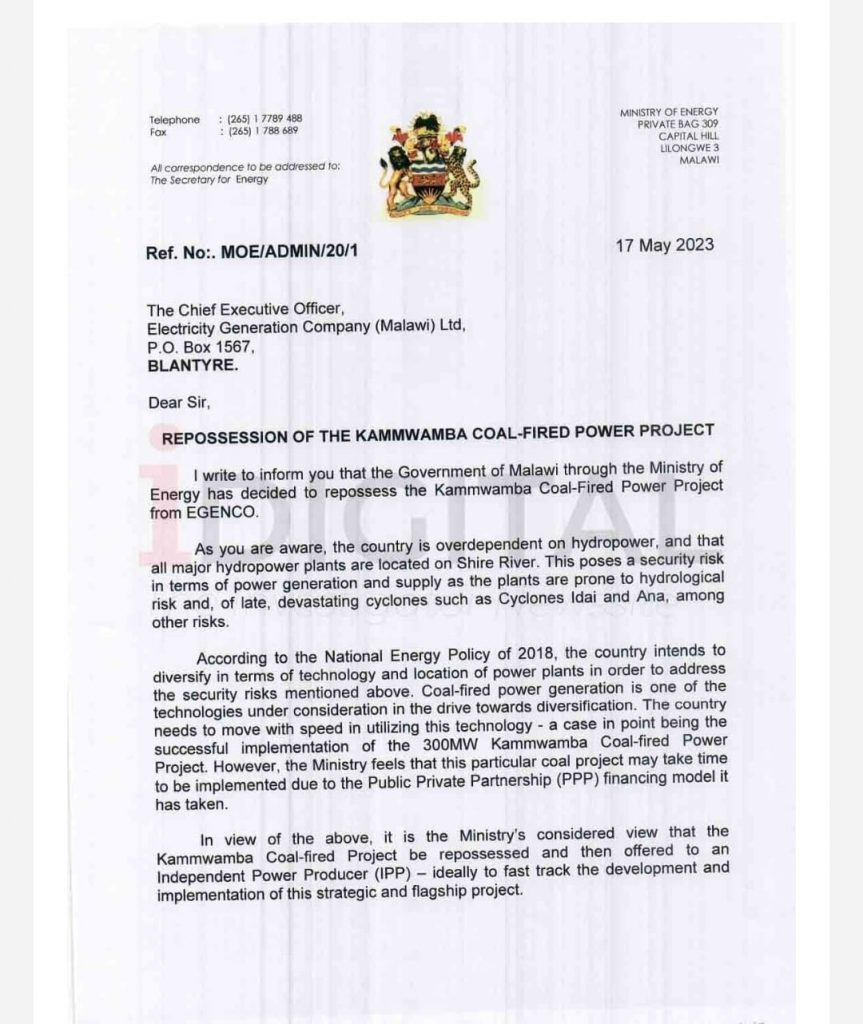
Zamba and other officials are also linked to the Madras Security passport deal, which reportedly involved processing Malawians’ data outside the country, with alleged payments to officials in Dubai and South Africa.
Sources allege that K270 million was paid to police and justice officials to suppress investigations, while investigators were diverted toward peripheral issues, including searching of vehicles allegedly stolen from OPC at Zamba’s Nkhatabay cottage.
NEEF: Estimated Losses of K1 Trillion
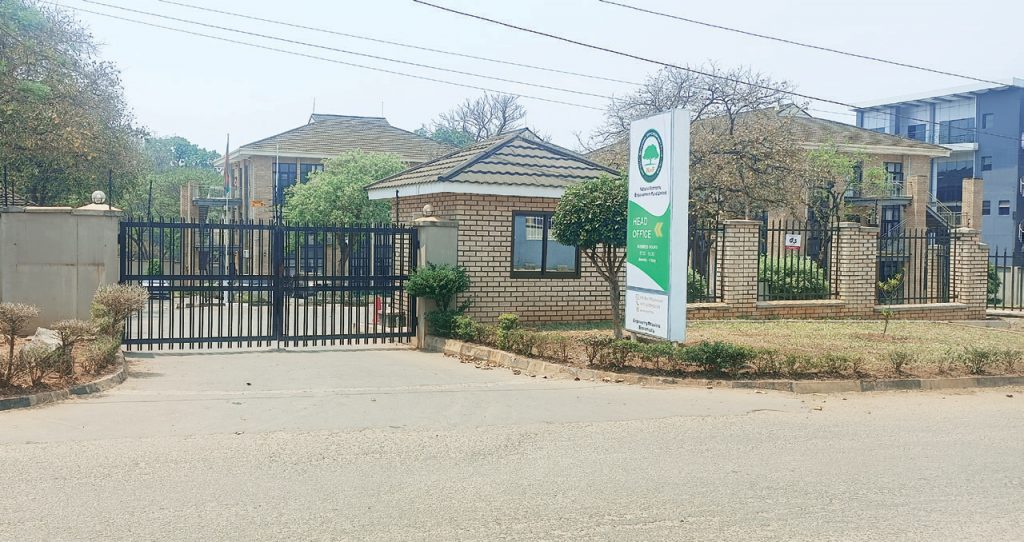
The National Economic Empowerment Fund (NEEF) is assessed as another major leakage point, with billions allegedly lost through politically motivated lending, fertilizer mismanagement, and a K3 billion write-off in 2024. Despite the scale of losses, no senior accountability measures have reportedly been taken.
MAREP and Institutionalised Patronage
The Malawi Rural Electrification Program (MAREP) is alleged to have awarded contracts primarily to friends, family members, and party loyalists. Each funding cycle is estimated at approximately K40 billion, warranting a comprehensive audit.
ACB Under Internal Corruption Allegations
An aggrieved former ACB employee alleges that confiscated properties in Mzuzu and Lilongwe were converted into income-generating assets for ACB officials. The Ombudsman is reportedly investigating illegal recruitment under the former Acting Director General.
Banking Sector and Suppression of Investigations
A local commercial bank (name withheld but read next story) is alleged to have facilitated illegal transactions and bribed senior Justice officials to remove its name from corruption investigations, particularly those involving foreign exchange dealings.
New Justice Department Offices and Alleged Influence Peddling
A plastic processing company premises is alleged to have been converted into a residence for Justice officials controlling sensitive legal matters at Capital Hill. Sources urge scrutiny of Justice Department activities between September and December 2025, alleging protection of looters in exchange for stolen funds.
The Investigator will start publishing and republishing case and case it has covered and ask the status of investigations from the official agencies from 1 February to ensure Malawians, suffering from economic genocide recover their dues.
Editors View: Time for Accountability and Economic Justice
The cumulative evidence presented highlights a troubling pattern of systemic looting across various institutions and programmes in Malawi. This widespread misappropriation of resources has significantly contributed to inflation, an increase in debt servicing obligations, and a steady decline in living standards nationwide. It is clear that Malawians did not vote to exchange one corrupt administration for another, yet the current situation amounts to what can only be described as economic treason.
President Professor Aurthur Peter Mutharika has unmistakably articulated his expectations of those he appoints to serve in public office: deliver results or step aside. This stance is not only commendable, but it is also supported by the wider public. We stand with the President in his commitment and pledge to revisit these issues persistently, demanding answers and transparency regarding the use of public funds and the fate of taxpayer money.
Institutions charged with upholding justice, including the Ministry of Justice, the Attorney General’s Chambers, the Director of Public Prosecutions (DPP), the Financial Intelligence Authority (FIA), and the Anti-Corruption Bureau (ACB), must reaffirm their loyalty to the interests of the Malawian people. Malawi’s modest size means that abrupt improvements in individuals’ lifestyles are easily detected, and ongoing inertia only increases the risk of further exposure of clandestine deals and illicit payments extracted from offenders.
In the forthcoming report, we intend to expose the foreign exchange cartels that, with the assistance of certain state agencies, are exacerbating the rising cost of living. These harmful practices must come to an end immediately to allow Malawians to regain their livelihoods. Echoing the sentiments of the Minister of Finance, Joseph Mwanamvenkha, those seeking higher salaries within the public sector are encouraged to pursue opportunities elsewhere. Similarly, we assert that individuals whose sole purpose is to shield looters for personal gain should exit government service. Now is the moment for all citizens and officials to unite and actively work towards reversing the self-inflicted poverty by prioritising service to our nation.

More Stories
K90 billion Amaryllis
MACRA DG Daud Sulieman fired
West, not east gives Malawi more