

…One allegedly escapes…
…questions over escape
The Malawi Police were heading for a public commendation for what appeared to be a breakthrough, capturing two alleged masterminds behind a string of high-profile kidnappings.
On the surface, it looked like progress. But beneath the praise, a more troubling narrative began to take shape. Rumours quickly spread that despite the arrests, powerful forces and financial incentives might still be influencing outcomes within the service.
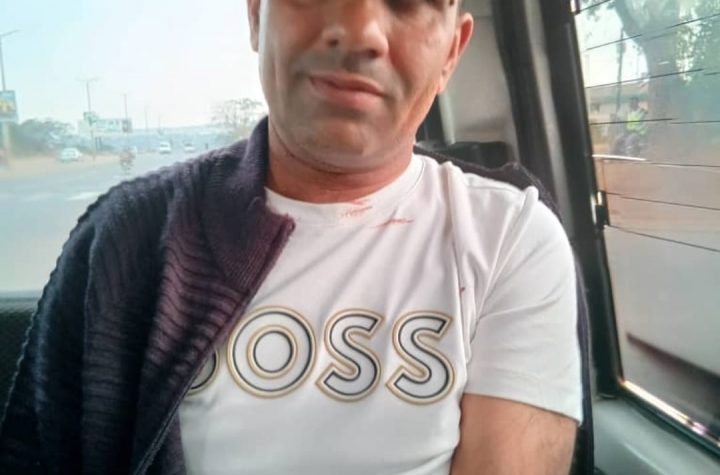
These suspicions intensified when one of the suspects, identified as Faruk, allegedly escaped under questionable circumstances at Phalura in Balaka, an incident that raised more questions than answers.
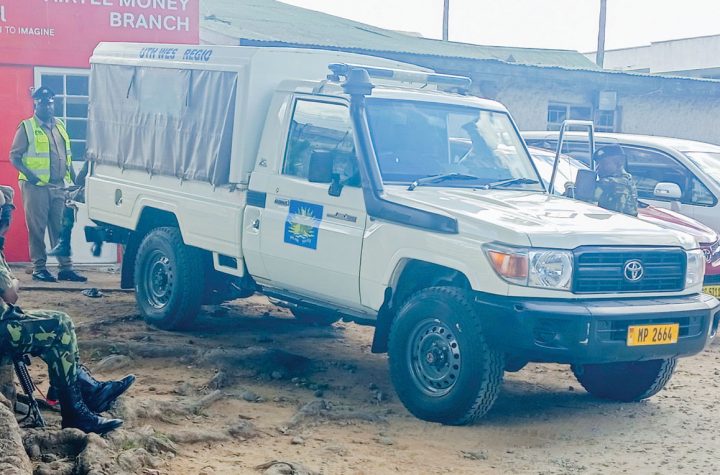
When The Investigator crew arrived at Phalura roughly twenty minutes after the reported escape, they were met with an eerie stillness. There were no officers searching the area, no signs of urgency, no indication that a dangerous suspect had just fled.
The absence of any coordinated response suggested something far more deliberate, that Faruk had not escaped in the conventional sense but had instead been quietly released. The prevailing theory among observers was that he had simply switched vehicles and continued his journey, possibly with the knowledge or even assistance of those tasked with transporting him to Lilongwe.
This incident did not exist in isolation. Over the past four years, four kidnappings have shaken the country, with an estimated US$2.1 million paid in ransom, averaging about US$500,000 per case. Despite the scale of these operations and the large sums of money involved, the perpetrators have consistently managed to evade lasting consequences, leaving behind a trail of speculation about how such crimes could persist without deeper systemic involvement.
Attention soon turned to two Pakistani nationals: Zia Butt, also known as “Jesus,” and Soyfan Razak. Both were already wanted fugitives, with Butt having previously been deported in the 1990s after being found in possession of a firearm.

Yet, despite that history, he somehow returned to Malawi, reportedly aided by weaknesses in immigration controls. Police insiders later claimed that Butt was even found with a Malawian passport upon his arrest. Razak, believed to be his close associate, was suspected of being the technological brain behind the operations, orchestrating communications and logistics from behind the scenes.
For years, little progress had been made in resolving these cases, leading to growing frustration. It was only after intervention from Homeland Security Minister Peter Mukhito and his deputy, Norman Chisale, that pressure mounted on law enforcement to act decisively. Concerns had begun to ripple beyond national borders, with investors reportedly unsettled by the country’s inability to curb such high-profile crimes. Under mounting scrutiny, police finally moved in to apprehend Butt and Razak, detaining them at Lumbadzi Police Station.
Yet even this development carried an air of unease. Insiders at Lumbadzi suggested that the suspects were being held under unusually comfortable conditions, sparking speculation that their detention might be temporary. There were whispers that bail could be arranged as early as Tuesday, raising doubts about whether justice would truly be served.
As The Investigator continued to compile details of these arrests, a third figure emerged, Faruk, described as a close associate of Butt. He was apprehended in Limbe and was reportedly being transferred to Lilongwe when the now-infamous “escape” occurred at Phalura. The circumstances surrounding his disappearance seemed almost implausible.
One would expect an immediate and intensive manhunt, particularly along the Zalewa road or in nearby villages. Instead, there was nothing. No roadblocks, no search parties, no eyewitness accounts. It was as if Faruk had vanished into thin air. Some sarcastically likened his disappearance to the biblical ascension of Elijah, noting how improbable it was for someone to disappear so completely in an open area with minimal cover.

The officers escorting him would have had clear visibility of his movements, yet there has been no coherent account of which direction he fled or how he managed to evade capture. Increasingly, the narrative being whispered is that Faruk did not flee at all, but was quietly escorted out, possibly even beyond Malawi’s borders into Mozambique, with a figurative salute and farewell.
This alleged escape has added fuel to an already controversial pattern surrounding the kidnappings. The logistics alone raise suspicions: collecting and distributing half a million dollars in cash within Malawi should leave a trace, yet these transactions seem to vanish without a ripple. In a densely populated country where communities are tightly knit and observant, such invisibility is difficult to explain without some level of internal facilitation.
As a result, questions have multiplied. Rumors suggest that the operation may extend beyond the kidnappers themselves, potentially involving individuals within law enforcement and even elements of the legal system. While these claims remain unverified, the circumstances, particularly Faruk’s disappearance, have cast a long shadow over the integrity of the investigation.
For now, the public is left watching closely, waiting for clarity that has yet to come. The Investigator will provide further updates by Tuesday evening.

More Stories
Kidnapping Suspect Who Jumped from Police Vehicle Recaptured
Ntcheu Dzonzi Vai MP Dyless Mbengo Flees Residence over K150 million unpaid produce
PAC Shields Amaryllis Owners